
About the National Center for Medical-Legal Partnership
Our Mission
Low-income and other historically marginalized communities have less access to basic needs and opportunities due to deeply rooted inequities in systems and practices that shape their environments. Unstable housing, discrimination, and violence all lead to poor health. Problems don’t exist in silos; solutions shouldn’t either. Since 2006, the National Center for Medical-Legal Partnership has been helping health organizations embed lawyers into their care teams to identify and resolve legal issues that drive health outcomes.
Our mission is to advance health equity and address the root causes of poor health by making access to justice and legal assistance a standard part of health care in the United States.
Our Work
Healthcare and legal organizations can be powerful allies in the pursuit of health equity and justice. When they coordinate and integrate care, the health and well-being of individuals and communities improves. But integrating two complex systems – with different practices and professional norms – requires specific knowledge and action. It also requires shifts in policies that support funding, sustainability, and scalability for these programs.
We bridge the divide and demonstrate what works. We do this by:
Redefining Policy and Practice Across Sectors: Advancing policies, aligning professional training and practices that improve health and well-being, and providing technical assistance to support systems transformation.
Convening the Field: Fostering the development and sharing of best practices among practitioners and policymakers across sectors through national and regional meetings and learning networks.
Building the Evidence Base: Establishing and implementing clearly defined metrics that enable organizations using the MLP model to measure their impact, set goals for performance improvement, and demonstrate outcomes.
Catalyzing Investment: Developing public and private sector financing strategies to foster the growth and sustainability of the MLP model of care.
Read the latest news from the National Center.
Our Team
-
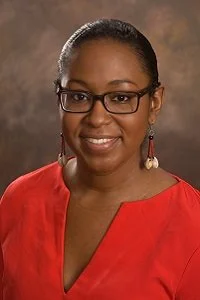
![Bethany Hamilton Portrait]()
Bethany Hamilton, JD
DIRECTOR
-
![Reha Manikandasamy Portrait]()
Reha Manikandasamy, MS
CENTER ASSOCIATE
-
![Hannah Silverman Portrait]()
Hannah Silverman, MPH
SENIOR RESEARCH ASSOCIATE


Our Story
Like all great stories, ours is best told in three parts.
Part 1: Replication (2006 - 2012)
The National Center for Medical-Legal Partnership launched in 2006 at Boston Medical Center in Massachusetts. We grew out of the hospital’s medical-legal partnership program that had been improving the health and well-being of pediatric patients since 1993. Our initial goal was simple: to find out if the medical-legal partnership intervention that was successful at one hospital would work elsewhere.
We focused on replicating the model in different health care settings, for different populations, in urban and rural communities, and with different legal partners. We raised awareness, provided technical assistance, and convened health and legal practitioners together. By the end of 2012, there were over 200 medical-legal partnerships across the country and we knew it could work anywhere.
Part 2: Sustainability (2013 - 2025)
With the medical-legal partnership field growing, we knew we had to prove the model was effective. In 2013, we moved to our current home in The Milken Institute School of Public Health at The George Washington University. We gathered data and documented outcomes. We worked to help health care recognize legal services not as an add-on, but as essential to health. We built pathways through Medicaid, the Health Resources and Services Administration (HRSA), the Department of Veterans Affairs, and other systems to support cross-sector partnerships. We made the case that legal care belongs in the architecture of health care. At the end of 2025, there were close to 500 medical-legal partnerships in the United States.
Part 3: Systems Transformation (2026 onward)
Over the last five years, the growth of the MLP field has slowed, even as need in our communities has grown. And that slowdown is not because the medical-legal partnership model doesn’t work. It is because the boundaries of the current system are too small for the scale of the problem we are trying to solve.
We have said, often with pride, that the vast majority of federally-funded legal services organizations in this country now have medical-legal partnerships, many of which partner with multiple healthcare delivery organizations in their community. And that is something to be proud of. But it also reveals the limit. There is not enough legal aid in the legal-aid pharmacy. The need dramatically exceeds the supply.
Simply put, there is no way for the field to grow at the scale our communities need if we stay inside the current rules. What comes next has to be bigger. More structural. More public. More durable.
So, the National Center for Medical-Legal Partnership has chosen a new North Star for its third phase of work: universal access to justice for civil legal needs.
This means building a system where people can actually obtain timely, meaningful legal help in the civil matters that shape whether they are healthy, housed, safe, fed, employed, and able to care for their families. Conditions of daily life that determine health long before someone enters an exam room.
We believe the next phase for the medical-legal partnership movement is not simply about expanding medical-legal partnership as a program model. It is about using medical-legal partnership as a prototype and catalyst for something larger: a future in which legal access is treated as core public infrastructure.
Building this future will take a research agenda equal to the ambition of the moment. It will require better data coordination and better community governance. It will take ethical, trusted frameworks for sharing data across health, legal, and research partners. It will require statewide and national organizing. And it will take standards, workforce development, and financing models that make legal access scalable.
We–alongside partners from the research, advocacy, and public health communities—will work with the medical-legal partnership field to build the agenda, methods, trust, infrastructure, and political will required to move toward this future. It will take all of us.
“The choice is whether our response will remain bound by scarcity logic, or whether we will build the case for a new public commitment. A New Deal. A renewed social contract.
We are choosing to orient the next phase of the medical-legal partnership movement toward universal access to justice.
We are choosing that because it is what our communities need and deserve.
We are choosing it because history demands more than maintenance.
And we are choosing it because, quite frankly, there is nowhere else for medical-legal partnership to go if it is to meet the scale of the challenges in front of us.”
Our Values
How we work is as important as the work we do. In everything we do, we prioritize:
Universal Access to Justice: Working toward a world where everyone in the U.S. who needs a lawyer, gets a lawyer.
Health Equity: Ensuring fairness in health access and outcomes.
Collaboration: Building impactful and enduring cross-sector partnerships that are informed and led by communities.
Innovation: Driving creative solutions in areas such as policy, practice, research, education, finance, and technology, to address systemic challenges.
Contact Us
-
Milken Institute School of Public Health
The George Washington University
ATTN: Bethany Hamilton, National Center for Medical-Legal Partnership
2175 K Street, NW, Suite 215
Washington, DC 20037 -
Bethany Hamilton
Director
National Center for Medical-Legal Partnership
ncmlp@gwu.eduKatelyn Deckelbaum
Senior Media Relations Specialist
Milken Institute School of Public Health
The George Washington University
katelyn.deckelbaum@gwu.edu
All Other Inquiries
Are you looking for data about the MLP model or partnerships across the U.S.? Do you want more information about one of our trainings or resources? Are you setting up or working at a medical-legal partnership and looking for technical assistance? Do you want to partner with the National Center for Medical-Legal Partnership? Fill out the form below and our team will get back to you in 3-4 business days.